


What I discovered about studying, working & settling in the UK and Ireland will surprise you!
During my recent fam trip to the U.K. as a part of Global Reach counselling team, I managed to visit around 15 universities. We started our journey from London and ended up in ABERDEEN. My focus during the trip was to see the campuses and the cultural diversity, and, yes, the part-time work opportunity.
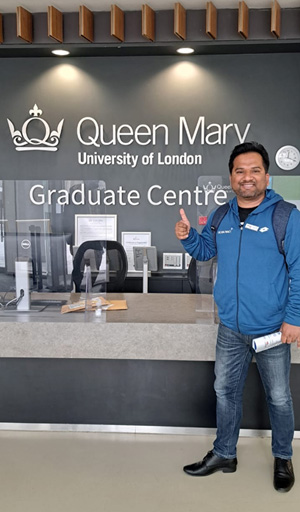
The universities were selling programmes such as Business, Banking, and Healthcare.
In London and the surrounding areas, I found students were struggling to find part-time work amid higher rents, whereas in the countryside, students were happier and had part-time jobs.
I won’t forget the student named Mr. Vikramjeet Singh, with whom I met at Robert Gordon University. His parents were Canadian citizens and living in Canada. With curiosity, I asked him, “You can easily get everything in Canada, why are you studying here in the U.K.?” He mentioned that the white-collar jobs he got in the U.K. he wouldn’t get in Canada, and he would never move back.
That was really an eye-opener! Many students studying in Scotland were happier, as every student wants a part-time job while studying. Vikramjeet was not the only one; I met more than 100 students during my fam trip who were happy and satisfied with their decision to study in the UK.

What are the most popular Career opportunities for Indian graduates in UK & Ireland?
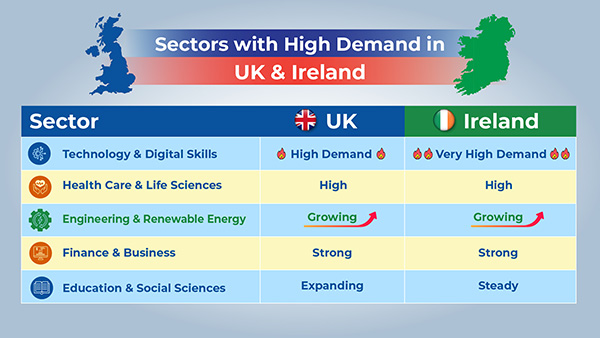
What I have observed that UK’s economy supports some of the most high-demand career areas, like software development, data science, cybersecurity, AI.
In finance & banking sector, London is an established global financial hub with roles in risk, analysis, accounting, and fintech.
In the engineering segment, demand for the civil, mechanical, electrical, environmental, and green energy sectors are increasing.
And, it goes without saying that UK always has a top-draw for doctors and nurses from Indian students passing out from UK universities.
Although overall graduate job postings recently dipped in some fields, other such as education, legal services, engineering, and real estate continue to grow.
There’s no doubt that Ireland indeed is getting popular among Indian students. The reason being Ireland is now Europe’s Tech Hub. It is home to Google, Meta, Apple, Microsoft with strong demand in Data, AI, Pharma & Finance.
Both UK and Ireland offer long-term residency
United Kingdom allows international graduates to stay and work for 2 years after a bachelor’s/master’s, or 3 years after a PhD – known as Graduate Route Visa.
If you secure a job offer with a licensed sponsor, you can switch from the Graduate Route to Skilled Worker Visa.
After 5 years of qualifying residency (e.g., under Skilled Worker or another qualifying visa), you can apply for ILR (Indefinite Leave to Remain) - the UK’s PR status.
Once you have ILR and meet citizenship requirements (typically 12 months after ILR), you can naturalise as a British citizen.
Recent immigration policy changes may tighten salary thresholds for Skilled Worker visas, so planning early is the key.
For Ireland, bachelor’s graduates can stay for 1 year, and master’s graduates for 2 years, to look for work after their studies under the third level graduate scheme.
Ireland offers multiple employment pathways for international graduates aiming to build long-term careers and settle in the country. The Critical Skills Employment Permit serves as a fast-track route for highly qualified professionals in sectors such as IT, finance, and healthcare. This permit is designed to attract skilled talent into key industries, and after completing two years under this scheme, individuals can apply for Stamp 4, which provides open work rights — a significant milestone toward permanent residency.
In contrast, the General Employment Permit is available for a broader range of occupations but generally requires five years of continuous employment before one becomes eligible to apply for permanent residency.
Once a professional has legally resided in Ireland for five years, they can apply for long-term residency, and with continued residence, eventually qualify for Irish citizenship.
Many international professionals find Ireland an appealing destination because the Stamp 4 status offers greater flexibility and independence — removing the need for employer sponsorship renewals much earlier than comparable immigration routes in the UK.
Talk to a Global Reach counsellor today!
So, which destination is best for you – UK or Ireland?
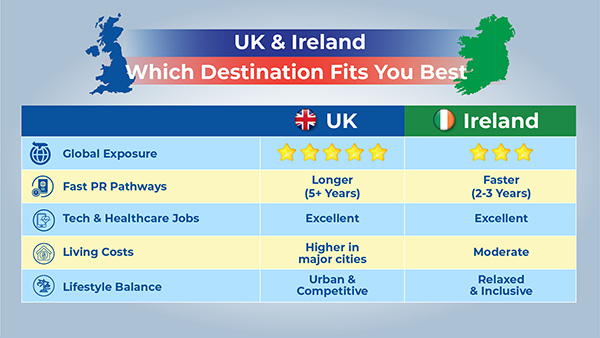
If your priority is fast residency with strong job opportunities in tech or specialist sectors, Ireland often offers faster PR pathways through the Critical Skills Employment Permit and Stamp 4.
Though UK offers lot of options in finance, creative industries, engineering, but PR typically takes longer (around 5 years with sponsorship).
Conclusion: my personal takeaway
My recent U.K. fam trip wasn’t just about exploring universities; it was about understanding real student experiences and career realities. From London’s competitive hustle to Scotland’s balanced lifestyle, one thing was clear: the UK and Ireland both hold immense promise for international students.
For those seeking strong academic reputations, part-time job options, and long-term settlement opportunities, these destinations remain unbeatable. Whether you’re drawn to Ireland’s fast-track residency or the UK’s global career exposure, your study abroad journey here can truly be life-changing just like the stories I heard from students across campuses.
If your goal is to achieve faster residency and greater work flexibility, Ireland stands out as the ideal destination. However, if you’re seeking global recognition, diverse career opportunities, and world-renowned academic prestige, then the United Kingdom is the perfect choice.
Ready to start your study-abroad journey? Schedule Your Free Consultation
Frequently Asked Questions (FAQs)
1. Is it easy for international students to find part-time work in the UK?
It depends on the region. Students in Scotland and smaller towns usually find part-time jobs more easily than those in London.
2. Which sectors hire the most international graduates?
Tech, healthcare, finance, engineering, and education are top recruiters in both the UK and Ireland.
3. How long can I stay after graduation?
- UK: Up to 2 years (3 for PhD) through the Graduate Route.
- Ireland: Up to 2 years under the Third Level Graduate Scheme.
4. Does Ireland offer faster PR opportunities than the UK?
Yes. Through the Critical Skills Employment Permit, students can qualify for Stamp 4 (open work rights) in just 2 years, much faster than the UK’s ILR route.
5. Which country is better for international students overall?
It depends on your goals. Choose the UK for global exposure, academic reputation, and professional versatility. Choose Ireland for a quicker path to residency and an innovation-driven job market.
Start your UK or Ireland study adventure today! Enquire Now
Content Authored by:

Vikram Panchal is a seasoned overseas education professional, currently serving as the Team Lead-Counselling at Global Reach, Chandigarh. With over nine years of experience guiding students towards their international study goals, he brings deep insight and practical expertise to every interaction. Passionate about helping students make informed academic choices, Vikram believes in combining empathy with strategy to create successful global journeys.