



Study in Dubai: A detailed Guide for International Students | Everything you need to know about studying in UAE
Dubai is rapidly becoming a top global study destination—offering world-class education, multicultural living, and career-ready opportunities. Indian students can now earn UK, Australian, or Canadian degrees at 30–40% lower costs while enjoying safety, modern lifestyle, and proximity to home.
This 2026 guide covers everything from top universities and scholarships to student life, visa process, and post-study work options. Discover how Dubai blends global standards with local comfort—making it one of the most practical and future-focused choices for international education.
Have you ever imagined studying in a city where futuristic skylines meet desert sunsets; where you can earn a UK, Australian, or Canadian degree, sip kadak chai by the beach after class, and still be just a few hours away from home?
Welcome to Dubai, the city where education, lifestyle, and opportunity converge.

Why choose Dubai as a study destination?
A student story to begin with
When Ananya, a psychology student from Mumbai, first planned her study abroad journey, she dreamed of going to Australia. But one counselling session changed everything. She realised she could pursue the same Australian university program in Dubai at a lower cost, closer to home, and with access to global internships.
Fast-forward two years: Ananya is now completing her degree at the University of Wollongong Dubai, interning with a global brand in Business Bay, and exploring the city’s endless cultural festivals with classmates from over 200 nationalities.
Her story isn’t unique, it’s becoming the norm. Dubai is no longer just a travel destination; it’s a thriving global education hub.
What makes Dubai a rising global education hub?
Dubai has transformed into one of the world’s fastest-growing higher-education centres, drawing students from across India, Africa, Europe, and Southeast Asia.
According to the Knowledge and Human Development Authority (KHDA), Indian students account for 42 % of Dubai’s international student population - a sign of how the city’s global education model is reshaping choices for families in the region.
The UAE government is taking a long-term, strategic approach to education. Through the Education 33 (E33) Strategy, the focus is on learner-centric growth and preparing students for the future workforce, with an ambitious goal of achieving 90% employability among graduates.
At the same time, the country is witnessing rapid growth in several future-focused industries. Sectors such as FinTech, Biotechnology, Creative Media, and Sustainable Agriculture are expanding quickly, supported by national initiatives like the National AI Strategy 2031, creating strong career opportunities for graduates.
Another advantage is proximity and accessibility. Dubai is only a short flight away from India and many Asian cities, making it far easier for students to travel back home when needed. This closeness also offers families greater comfort and convenience compared to studying in more distant destinations.
Dubai is also considered relatively affordable compared to many traditional study destinations. Tuition fees and living expenses are often 30–40% lower than countries like the UK or Australia, while students still benefit from internationally accredited universities and globally recognized degrees.
Finally, students often find Dubai culturally comfortable and familiar. From Indian restaurants and Diwali celebrations to cricket screenings and English-medium education, the city offers a unique mix of global exposure and cultural familiarity that helps international students feel at home.
In short, Dubai gives you the world-class exposure of the West, the comfort of home, and the career edge of a dynamic global market.
“Studying in Dubai feels like living in the future, yet I can still call my mom every evening without a time-zone battle,” jokes a business-student alumnus from Kerala.
Sources:
- The Economic Times (25 Dec 2025)
- World Economic Magazine (24 Oct 2025)
Book a free 1-on-1 session with Global Reach and find your ideal program
Is Dubai safe for studying during war or regional conflicts, and will it impact overseas education?
Many students and parents wonder about the safety of studying in the Middle East, especially during times of tension. The UAE, particularly Dubai, is known for its safety and stable government. Schools and universities there are running smoothly, and many international students are still enrolling.
Although regional events can sometimes raise concerns about travel or airspace issues, Dubai’s educational institutions and support systems are set up to keep education uninterrupted. It’s wise for students to keep an eye on official updates from the government and their universities. Still, Dubai has a solid track record of being a safe place for international studies, even when there are regional worries.
For anyone looking at overseas education, it’s essential to consider the destination's stability, education quality, job prospects, and support for students. Dubai excels in all these areas, making it a top choice for those wanting a global education.
How does Dubai’s education system compare to the UK and Australia?
Dubai has adopted an international academic ecosystem that blends the best of British, American, and Australian systems but with the flexibility and pace of the Middle East.
Quick Snapshot:
- Global curricula: Over 35 % of schools follow the British curriculum, 32 % Indian, and 15 % American ensuring global academic alignment.
- University quality: Branch campuses like University of Birmingham Dubai and Heriot-Watt University Dubai offer the same degrees as their home universities.
- Cost & lifestyle: Tuition and tax-free living make Dubai more affordable than the UK or Australia, especially for Indian students.
- Industry links: While the UK and Australia have longer post-study work windows, Dubai counters with fast industry integration and paid internships.
- Regulatory assurance: The KHDA ensures universities maintain international quality benchmarks.
In short: Dubai is a modern, globally recognised, and practical alternative - one where education connects directly to employment.
Is studying in Dubai worth it, or are we just paying UK fees for zero work rights?
Dubai has become a popular choice for international students, especially those who want recognized degrees without going too far from home. While tuition fee at some universities is similar to that of their UK campuses, living expenses in Dubai are generally lower. Plus, its closeness to India makes it convenient.
Students also have the chance to take on part-time jobs, internships, and attend networking events, giving them valuable experience. Most importantly, Dubai is home to many multinational companies and flourishing industries like technology, business, hospitality, logistics, and finance. It's a great place for those seeking a solid education and career opportunities.
Which are the top universities in Dubai for international students?
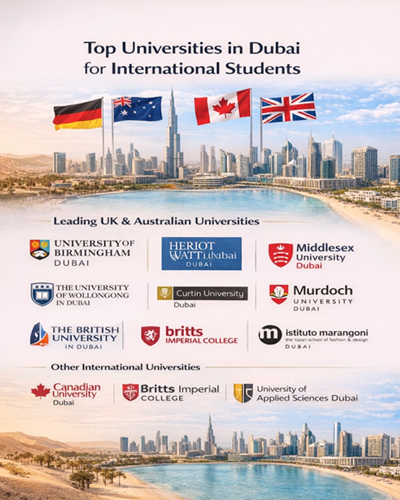
Dubai’s education landscape reads like a global university map. From UK to Canada, Australia to Germany - the city hosts top international names that offer transfer options, dual degrees, and global exposure.
Leading UK and Australian Universities in Dubai:
- University of Birmingham Dubai
- Heriot-Watt University Dubai
- Middlesex University Dubai
- University of Wollongong in Dubai
- Curtin University Dubai
- Murdoch University Dubai
- British University in Dubai
Other International Universities:
- Canadian University Dubai and Britts Imperial College: offer seamless transfer pathways to Canada.
- University of Applied Sciences Dubai: enables campus transfers to Germany.
- Istituto Marangoni Dubai: lets aspiring designers or luxury-brand consultants transfer to Italy or the UK.
Popular Study Areas:
- STEM & Technology: AI, Data Science, Cybersecurity, Psychology
- Business & Management: MBA, FinTech, Accounting
- Engineering: Civil, Renewable Energy
- Healthcare & Hospitality
- Supply Chain & Logistics
Many students start their journey in Dubai and later transfer to main campuses in the UK, Australia, Canada, Germany, or Italy, carrying credits with them - an arrangement that saves time, cost, and still delivers global credentials.
Talk to a Global Reach expert now
Which are the top courses to study in Dubai?
Dubai’s education ecosystem is closely aligned with its fast-growing industries, which means students often choose programs that combine global academic standards with strong career prospects. Many international universities in Dubai offer degrees in fields that are directly connected to sectors like technology, business, infrastructure, and creative industries. Here are some of the most popular courses international students pursue while studying in Dubai.
- Business and Management
- Artificial Intelligence & Data Science
- Cybersecurity and Information Technology
- Engineering
- Psychology
- Media, Communication & Digital Marketing
- Hospitality & Tourism Management
What scholarships and financial aid are available for international students in Dubai?
The myth that studying abroad is expensive? Dubai breaks it.
Most international campuses offer merit-based scholarships that can cover up to 50 % of tuition fees, alongside bursaries for Indian and South Asian students.
“I was awarded a 40 % scholarship just for maintaining a good GPA that’s something I wouldn’t have easily got in Australia,” says Aarav, an engineering student from Delhi.
If you’re serious about exploring scholarships in Dubai, speak with a Global Reach Counsellor, they can help you compare eligibility, documentation, and deadlines across multiple universities.
How affordable and convenient is student living in Dubai?
One of the first things students notice: How easy it is to settle in?
Most universities provide on-campus housing with modern amenities: gyms, cafeterias, and study lounges.
Off-campus, areas like Academic City, Al Barsha, and Dubai Silicon Oasis are filled with student residences such as Uninest Student Residences and The Myriad Dubai, starting around AED 2,000 per month.

Public transport is efficient: the Dubai Metro, RTA buses, and student Nol cards make city travel affordable. Combine that with low crime rates and 24/7 safety, and Dubai easily ranks among the safest study destinations globally.
Start your Dubai study journey with Global Reach
Can international students work part-time or do internships while studying?
Yes, international students can work part-time up to 15 hours/week during semesters and 40 hours/week during holidays.

Dubai is not only a global education hub but also a thriving business destination, offering international students valuable exposure to real-world work environments. Students can work part-time for up to 15–20 hours per week during semesters and full-time (up to 40 hours per week) during holidays, subject to visa and permit conditions. Those enrolled in universities within Dubai International Academic City (DIAC) or Dubai Knowledge Park (DKP) can work legally with a valid student visa, a No Objection Certificate (NOC) from their university, and an official work permit.
Popular part-time roles include positions in retail, hospitality, customer service, events, and university administrative support helping students build essential communication, teamwork, and time management skills. For postgraduate students, flexible learning schedules and evening classes allow for even greater work-study balance.
What truly set Dubai apart are its internship opportunities. Many universities partner with leading companies across business, finance, media, hospitality, engineering, and technology sectors, offering hands-on industry experience. Students often intern with multinational firms and startups in innovation zones like Dubai Internet City and Dubai International Financial Centre, gaining exposure to international business standards and global networks.
Top institutions such as University of Birmingham Dubai, Heriot-Watt University Dubai, Middlesex University Dubai, and Manipal Academy of Higher Education Dubai actively collaborate with industries through career fairs, networking sessions, and placement support. Their dedicated career services help students with CV building, interview preparation, and job searches often leading to full-time employment post-graduation.
“My internship at a fintech company here became my first full-time job and I didn’t even have to leave the city,” shares Neha, a Business graduate.
Dubai rewards skill and initiative and if you’re proactive, you’ll leave with more than a degree: you’ll leave with experience.
Why Dubai is known for its diversity and cultural inclusion?
Imagine finishing class and heading to Kite Beach for sunset volleyball, or studying at a rooftop café overlooking the Burj Khalifa. That’s what weekends often look like.
Campus life is dynamic - clubs, student councils, and cultural festivals fill the calendar. From Diwali nights to Eid feasts, Christmas bazaars to film weeks, Dubai’s multicultural energy is everywhere.
Universities nurture inclusion through mentorship, career counselling, and community engagement helping international students feel at home from day one.
How diverse and inclusive is student life in Dubai?
Dubai is one of the most diverse and inclusive cities on the planet. You might share your dorm with a Kenyan designer, and a French engineer, all in the same week.
Respect for local culture blends with global openness. You’ll see temples, churches, mosques, and gurdwaras co-existing peacefully. The Year of Tolerance initiative and gender equality programs reflect how the city values cultural balance and safety.
“You learn empathy just by living here. I celebrated three New Years - Western, Chinese, and Hijri in the same month,” laughs a Nigerian postgraduate student.
What are the best things to do in Dubai for students on weekends and holidays?
Dubai is a playground of contrasts; futuristic, yet deeply cultural.
On Weekends:
- Adventure: Desert safaris, dune bashing, kayaking in Hatta
- Culture: Al Fahidi Historic District, Museum of the Future, and Global Village
- Beaches: JBR, La Mer, Sunset Beach
- Food & Shopping: Global cuisines, souks, and the Dubai Mall
Travel Perks: With budget airlines like Flydubai and Air Arabia, short trips to Oman, Qatar, Bahrain, or Georgia are common.
Pro Tip: Carry your student ID - it unlocks discounts on everything from metro passes to museum entries.

How can I apply for a Dubai student visa, and what are the key requirements?
Getting a student visa for Dubai is a straightforward, well-supported process.
You’ll Need:
- Offer letter from a UAE university
- Valid passport (6 + months)
- Academic transcripts & English-proficiency proof
- Medical test & proof of funds
- Accommodation details
Processing takes around 2–4 weeks, and dependents (spouse/children) can accompany you if you meet financial criteria. Universities often help with Emirates ID, health insurance, and airport pick-ups - making the relocation seamless.
Apply for your Dubai student visa with Global Reach support
Are post-study work opportunities (PSW) available in Dubai after graduation?
Unlike the UK or Australia, Dubai doesn’t have an automatic post-study visa but it offers flexible alternatives for those who want to stay and work:
- Job Seeker Visa (60–120 days) to find a job after graduation.
- Employment Visa employer-sponsored route for full-time work.
- Green Visa (5 years) self-sponsored for skilled professionals.
- Golden Visa (10 years) for top graduates, entrepreneurs, and innovators.
Many students start with internships, convert them into job offers, and later apply for long-term residency under Green or Golden Visa programs.
Can I stay and work in Dubai after graduation?
Dubai has a lot of great job opportunities for graduates in many fields. After finishing their studies, many students decide to stay in the UAE to work for local or global companies. The city's prime location, robust economy, and international business scene make it a great place for career development.
Graduates with backgrounds in business, engineering, technology, healthcare, hospitality, aviation, and finance can find particularly good job prospects in Dubai and throughout the Middle East.
Can you work in Australia after studying at an Australian university in Dubai?
An important question many international students ask when considering universities like the University of Wollongong in Dubai, Murdoch University Dubai, and Curtin University Dubai. While these institutions offer the same Australian degrees, eligibility for the Post-Study Work Visa (Australia) requires completing at least 2 years of study in Australia.
Start your degree in Dubai and transfer to Australia to finish your studies. This approach allows students to reduce initial costs, gain international exposure, and still qualify for post-study work opportunities in Australia with guidance from Global Reach.
What career prospects and permanent residency options exist for graduates in the UAE?
Dubai’s career market is one of the most dynamic globally.
High-demand industries:
- AI, Data & Tech
- Finance & FinTech
- Engineering & Smart Infrastructure
- Healthcare & Biotech
- Tourism & Hospitality
- Creative Media & Marketing
Dubai’s tax-free income, merit-based promotions, and strategic location between Europe and Asia make it a launchpad for global careers.
The Golden Visa and Green Visa systems provide long-term residency options similar to permanent residency in Western countries, letting graduates live, work, and sponsor families independently.
How does studying in Dubai help build global career pathways?
Dubai’s pathway programs foundation years, pre-masters, and undergraduate transfers link directly to top universities in the UK, Australia, Canada, Germany, and Italy.
Why students choose pathways:
- Lower tuition fees & cost of living
- Guaranteed progression into main degree
- Flexibility to transfer mid-course
- Opportunity to access Post-Study Work rights in destination countries after transferring
“I did my first two years in Dubai, then transferred to Melbourne for the final year saving ? 10 lakhs overall,” shares Riya, a business student now working at a multinational company.
Why students love Studying in Dubai?
According to a Global Reach alumni, “I came to Dubai not knowing anyone. My first friend was a civil engineer from Brazil who loved Bollywood movies. I learned Arabic greetings from an Emirati classmate, and by graduation, I had internships in tech, consulting, and media all before age 23. Dubai didn’t just give me a degree; it gave me a global family and a career I hadn’t even imagined.”
Top reasons international students choose Dubai
- Multicultural vibe & global networking
- Safety & modern lifestyle
- Hands-on learning & internships
- Globally recognised degrees
- Fast career progression & long-term visas
Dubai blends modernity with heritage, career growth with culture, and education with adventure making it not just a study destination but a next-gen career ecosystem.
Discover how you can earn a UK, Australian, or Canadian degree right here in Dubai with lower tuition, real-world internships, and long-term career opportunities.
Talk to a Global Reach counsellor today for free guidance on universities, scholarships, and visa processes.
FAQs
1. Why choose Dubai for higher education as an international student?
Dubai offers world-class universities, global degree recognition, and exposure to diverse cultures, making it one of the fastest-growing international education hubs.
2. How does Dubai’s education system compare with study destinations like the UK or Australia?
Dubai’s international branch campuses follow globally accredited curricula from the UK, Australia, and the US ensuring high standards and easy credit transfers.
3. Which are the best universities in Dubai for international students?
Top names include University of Birmingham Dubai, Middlesex University Dubai, Heriot?Watt University Dubai, University of Wollongong in Dubai, and Murdoch University Dubai all offering globally recognized degrees.
4. What are the top courses to study in Dubai for career growth?
Business, Engineering, IT, AI, Media, and Psychology are among the most popular and employable programs in Dubai universities.
5. Are there scholarships for international students studying in Dubai?
Yes universities offer merit-based and need-based scholarships, with many institutions providing exclusive bursaries for Indian and South-Asian students.
6. What is the average cost of living for international students in Dubai?
Students typically spend between AED 3,000 - 6,000 per month, covering accommodation, food, travel, and entertainment affordable compared to other global study destinations.
7. Is Dubai safe for Indian and international students?
Absolutely. Dubai is consistently ranked among the safest global cities, with excellent student support, secure campuses, and modern transport infrastructure.
8. Can international students work part-time while studying in Dubai?
Yes. Students with valid visas can work up to 15–20 hours per week in approved sectors or during semester breaks, helping them gain valuable work experience.
9. Are internships easy to find for students in Dubai universities?
Universities have strong links with global companies like Emirates, EY, and Deloitte, offering internship opportunities and career placements.
10. What are the requirements for a Dubai student visa?
You’ll need a university offer letter, valid passport, photographs, financial proof, and medical fitness documents. Most universities help with the visa application process.
11. How long does it take to process a Dubai student visa?
The process usually takes 2-3 weeks after submitting all verified documents.
12. Can graduates stay and work in Dubai after completing their studies?
Yes. Under initiatives like the UAE Golden Visa and UAE Green Visa, high-achieving graduates can stay in the UAE for long-term work opportunities.
13. What are the best career opportunities for international graduates in Dubai?
Fields such as Technology, Finance, Logistics, Healthcare, and Tourism are in high demand, offering global exposure and competitive salaries.
14. Can studying in Dubai help students build global careers?
Yes, a Dubai degree opens pathways to jobs across the Middle East, Europe, and Asia with opportunities to transfer or pursue further studies abroad.
15. What do international students think about studying in Dubai?
Students highlight Dubai’s blend of academic quality, safety, global exposure, and lifestyle describing it as one of the best destinations for higher education abroad.