


Master of Dietetics
If you're passionate about healthy eating and well-being, and want to promote better understanding of the benefits of nutrition in diverse communities and settings, La Trobe's Master of Dietetics has been established to reflect the emerging needs of this changing profession.
La Trobe has a long history of nutrition education, and our new contemporary Master of Dietetics both builds on that history and embraces newfound developments and changing ideologies. Our person-centred, socially conscious approach to nutrition science favours the teaching of flexible concepts over dogmatic facts, and aids you in establishing a strong professional approach and individual identity.
Applying your research skills in diverse practice settings, utilise La Trobe's long-term industry partnerships to gain on-the-ground experience in clinical and community spaces. Your experience will prepare you for work in priority sectors, with focus on diversity, community inclusion and counselling.
Campus Information
Melbourne Campus
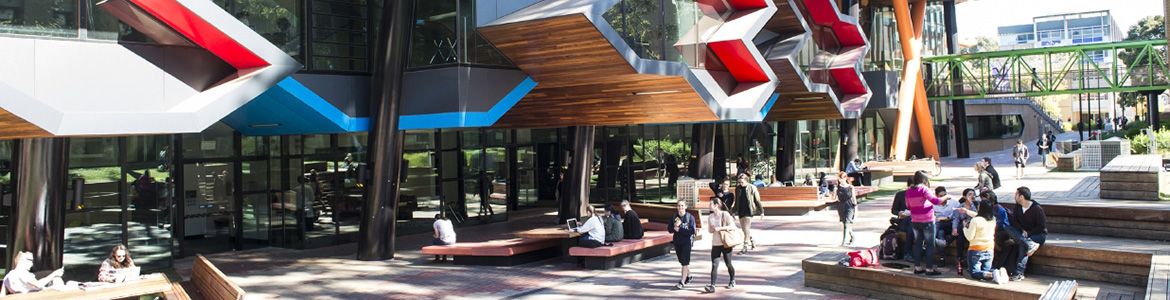
La Trobe’s Melbourne Campus combines parkland beauty with a vibrant campus culture filled with cafés, shops and a multi-level library. It’s also one of Australia’s largest university campuses. You’ll have access to state-ofthe-art facilities, including our brand-new tech and business labs, the La Trobe Institute for Molecular Science and our very own Wildlife Sanctuary. You'll also have help to achieve your academic best. We provide dedicated study rooms like the Women's Lounge, the Law Common Room, and the MASO (Mature Age Student Organisation) Lounge. And we host many cultural and academic events on campus to make you feel at home.
Intakes
- July
Application Processing Time in Days: 30
Minimum English Language Requirements
| English Level Description | IELTS (1.0 -9.0) | TOEFL IBT (0-120) | TOEFL CBT (0-300) | PTE (10-90) | |
|---|---|---|---|---|---|
| Expert | 9 | 120 | 297-300 | 86-90 | |
| Very Good | 8.5 | 115-119 | 280-293 | 83-86 | |
| Very Good | 8 | 110-114 | 270-280 | 79-83 | |
| Good | 7.5 | 102-109 | 253-267 | 73-79 | |
| Good | 7 | 94-101 | 240-253 | 65-73 | |
| Competent | 6.5 | 79-93 | 213-233 | 58-65 | |
| Competent | 6 | 60-78 | 170-210 | 50-58 | |
| Modest | 5.5 | 46-59 | 133-210 | 43-50 | |
| Modest | 5 | 35-45 | 107-133 | 36-43 | |
| Limited | 4 | 32-34 | 97-103 | 30-36 | |
| Extremely Limited | < 4 | < 31 | < 93 | < 30 |
Job Opportunity Potential
After graduation, you'll be ready to work as a registered dietitian. You could find employment in a growing range of clinical and community settings, including:
- Hospitals
- Help hospital patients recover from injury or illness.
- Private practice
- Work in private practice to provide care for a wide range of individuals and help them reach their health goals.
- Research
- Work in universities and other research organisations to further our understanding of nutrition. Work in the food industry to develop food products.
- Sports associations
- Provide individual care and support to improve performance and health outcomes.
- Community nutrition
- Provide nutritional education for general good health and promote nutrition through community-level education.
PSW Opportunity
Post Study Work Steam Renames to Post Higher Education Work Steam.
- Bachelor degree holders including honours can get upto 2 years of post study stay
- Master by course work and extended (with a duration exceeding 2 years) can stay upto 2 years
- Masters by research (with a duration exceeding 2 years) and PhD holder can stay upto 3 years
- The Maximum eligible age to apply for PSW will be reduced to 35 years of age from 50 years of age for all applicants
Due to the Australian Indian Economic Cooperation and Trade Agreement signed by the 2 countries, according to which:
- Indian students completing bachelor degree including honours can stay upto 2 years
- Bachelor degree with First class honours in STEM including ICT can stay upto 3 years
- Masters by coursework in extended researched (with a duration exceeding 2 years) can stay upto 3 years
- PhD students can stay upto 4 years
Admission Requirement / Eligibility Criteria
- WAM - Weighted Average Mark (WAM) 70%
- Successful completion of La Trobe Bachelor of Nutrition Science/Bachelor of Human Nutrition
- OR
- Successful completion of La Trobe Bachelor of Food and Nutrition, including completion of HBS301 as an elective
Successful completion of a cognate undergraduate Bachelor (AQF7) degree program in nutrition, or a science or health-related discipline with a nutrition minor or equivalent subjects. Subjects completed must include two units each of: human biology, human physiology, chemistry, and biochemistry, as well as units covering nutrition science, nutrition and disease, food science and food skills, general research and epidemiology.
The successfully completed cognate undergraduate Bachelor (AQF7) degree program in nutrition, or in a science or health-related discipline must have been completed within the last eight years.
Subsequent postgraduate study and/or work experience in a relevant area may also be considered.
The successfully completed cognate undergraduate Bachelor (AQF7) degree program in nutrition, or in a science or health-related discipline must meet the following conditions:
- Each subject must be equivalent to at least 0.125 Effective Full-time Study Unit (EFTSU).
- The required units of human physiology and biochemistry must be completed at a second-year tertiary level or higher (Australian Qualifications Framework (AQF) Level 6 or higher).
- The required general research and epidemiology must be completed at a second year tertiary level or higher (AQF level 6 or higher)
- Specialisation - compulsory: Physiology studies must have included systemic physiology and/or pathophysiology, including homeostatic mechanisms and at least six of the following eight systems: body defences (immune system), gastrointestinal, renal, endocrine, cardiovascular, respiratory, muscular and nervous systems.
- Specialisation - compulsory: Nutrition science must have included macronutrients and micronutrients (food sources, metabolism, storage and function), principles of energy balance and nutrient analysis of foods.
Subsequent postgraduate study and/or work experience in a relevant area may also be considered.
For More Information Please Contact To Our PSA Counselor.
- Course Code: 110805C
- Course Type: Full Time
- Course Level: Masters/PG Degree
- Duration: 01 Year 06 Month
-
Total Tuition Fee:
72000 AUD
Average Cost of Living: 29710 AUD /year
Application Fee: N/A
Similar Programs
- Master of Nursing Practice at La Trobe University
- Master of Psychological Science (Research) at La Trobe University
- Master of Strength and Conditioning at La Trobe University
- Master of Nursing at La Trobe University
- Master of Counselling, Rehabilitation and Mental Health at La Trobe University
- Master of Applied Science (Research) at La Trobe University