



Educational Studies–Inclusive Education (MA)
As classroom populations become increasingly diverse, many teachers are looking for the professional preparation to confidently create an inclusive classroom environment.
TWU’s Master of Educational Studies in Inclusive Education prepares you to support students with a broad range of inclusive education needs. These needs could include cognitive, social and sensory uniqueness, resulting from learning disabilities, emotional and behavioral disorders, giftedness, and developmental delays.
Why choose the MAES-IE program?
Equip yourself to meet the increasingly diverse learning needs of your students.
Become an inclusive leader and expert in inclusive education in your school.
Gain the qualifications to become a specialist administrator, such as a director of inclusive needs.
Prepare for a PhD program with our thesis track.
?Enhance your professional designation to be eligible for salary scale increases.
Additionally, TWU’s MAES program is recognized by the BC Ministry of Advanced Education and the TQS (Teachers’ Qualification Service) for salary upgrades. (Completion of MAES does not confer into a BC teaching certificate).
Campus Information
Langley Campus
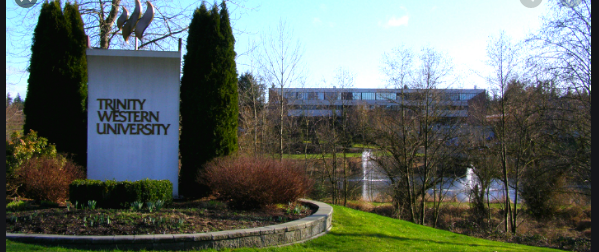
Trinity Western University is a 157-acre campus located outside Langley, BC, Canada. Its location is 45 minutes from downtown Vancouver and an hour from the North Shore mountains. Housing undergraduate and graduate programs, the campus includes residences, food services, health services, fitness centres, mail resources, sports facilities, a bookstore, a library, and an ecosystem study area.
Intakes
- Jan
- May
- Sep
Application Processing Time in Days: 30
Minimum English Language Requirements
| English Level Description | IELTS (1.0 -9.0) | TOEFL IBT (0-120) | TOEFL CBT (0-300) | PTE (10-90) | |
|---|---|---|---|---|---|
| Expert | 9 | 120 | 297-300 | 86-90 | |
| Very Good | 8.5 | 115-119 | 280-293 | 83-86 | |
| Very Good | 8 | 110-114 | 270-280 | 79-83 | |
| Good | 7.5 | 102-109 | 253-267 | 73-79 | |
| Good | 7 | 94-101 | 240-253 | 65-73 | |
| Competent | 6.5 | 79-93 | 213-233 | 58-65 | |
| Competent | 6 | 60-78 | 170-210 | 50-58 | |
| Modest | 5.5 | 46-59 | 133-210 | 43-50 | |
| Modest | 5 | 35-45 | 107-133 | 36-43 | |
| Limited | 4 | 32-34 | 97-103 | 30-36 | |
| Extremely Limited | < 4 | < 31 | < 93 | < 30 |
Job Opportunity Potential
By hiring TWU students and graduates, you tap into a pool of talent possessing skills, qualities, and competencies for the future of work, making them valuable assets in the workforce.
To post your opportunity, we encourage you to utilize our Career Connect system. This platform allows you to post full time, part time, seasonal and *work integrated learning opportunities. Your organization may request a free account. It is the quickest and most efficient way to connect with TWU talent.
*Work-integrated learning (WIL) is a form of curricular experiential education that formally integrates a student’s academic studies with quality experiences within a workplace or practice setting. WIL experiences include an engaged partnership of at least: an academic institution, a host organization, and a student. WIL can occur at the course or program level and includes the development of student learning objectives and outcomes related to: employability, agency, knowledge and skill mobility and life-long learning. (CEWIL)
At TWU, these experiences are either coordinated within the Academic Faculties or the Centre for Calling & Career Development. WIL short term unpaid placements such as practicum and field placements are coordinated by the program coordinators within the faculty or school. WIL longer term paid placements like internships and co-ops are typically coordinated with support of the CCCD. Academic programs of study may require a different number of hours to be completed and be scheduled at a particular time of year.
BENEFITS OF HIRING A WORK-INTEGRATED LEARNING STUDENT
Students bring new ideas, fresh perspectives, and enthusiasm to the workplace.
WIL programs offer access to diversely talented and highly motivated students and sometimes aid in vetting students before the hiring process begins, which reduces recruiting costs.
WIL students are short-term employees, which can be helpful to businesses in temporary times of need.
WIL terms may be an opportunity to evaluate a potential long-term employee before committing: many employers choose to hire co-op students after graduation.
WIL students can work on a wide range of assignments, from specific projects to general support.
PSW Opportunity
Eligibility for Post-Graduation Work Permit (PGWP):
Graduated from a designated learning institution (DLI) in Canada.
Desire to stay in Canada temporarily for work.
Important Note:
Graduating from a DLI doesn't automatically qualify you for a PGWP.
Validity of PGWP:
Depends on the length of the study program or the expiry date of your passport, whichever comes first.
Duration of PGWP Based on Study Program Length:
Less than 8 months (or 900 hours for Quebec credentials): Not eligible for PGWP.
At least 8 months (or 900 hours for Quebec credentials), but less than 2 years: PGWP may be granted for the same length as the study program (e.g., a 9-month program results in a 9-month PGWP).
2 years or more: PGWP may be valid for 3 years.
Completion of Multiple Programs:
PGWP may combine the lengths of each program if:
Each program is PGWP eligible.
Each program is at least 8 months (or 900 hours for Quebec credentials) in length.
Important Restriction:
You cannot obtain a PGWP if you already had one after completing an earlier program of study.
Admission Requirement / Eligibility Criteria
- Course Type: Full Time
- Course Level: Masters/PG Degree
- Duration: 02 Year
-
Total Tuition Fee:
48650 CAD
Average Cost of Living: 22895 CAD /year
Application Fee: 150 CAD