



Master of Science (Soil Science)
This qualification will give you the in-depth knowledge of soils. It will open up meaningful, relevant careers that address sustainable food production globally. As an aspiring soil scientist you will deal with the productive capacity of the land and how its management impacts on the environment.
Make our expertise your own
When you study soil science, you will be able to take advantage of Massey’s expertise in land-related disciplines. We have a wide and relevant group of expertise within the university, from agriculture, horticulture and earth science to ecology, environmental management and social sciences.
You will learn from, and research with, highly-skilled internationally-recognised and active researchers in these fields, with a huge depth of knowledge and experience. Whatever focus you’d like to have in your postgraduate study and research, there is likely to be an expert at Massey who can help you dig deeper into your area of interest.
Some examples of areas you could focus your research on include:
- sustainable nutrient management
- soil resource mapping and interpretation
- soil conservation
- irrigation, drainage and water footprinting
- water quantity and quality
- greenhouse gas mitigation
- nutrient cycling in crop and pasture systems.
Campus Information
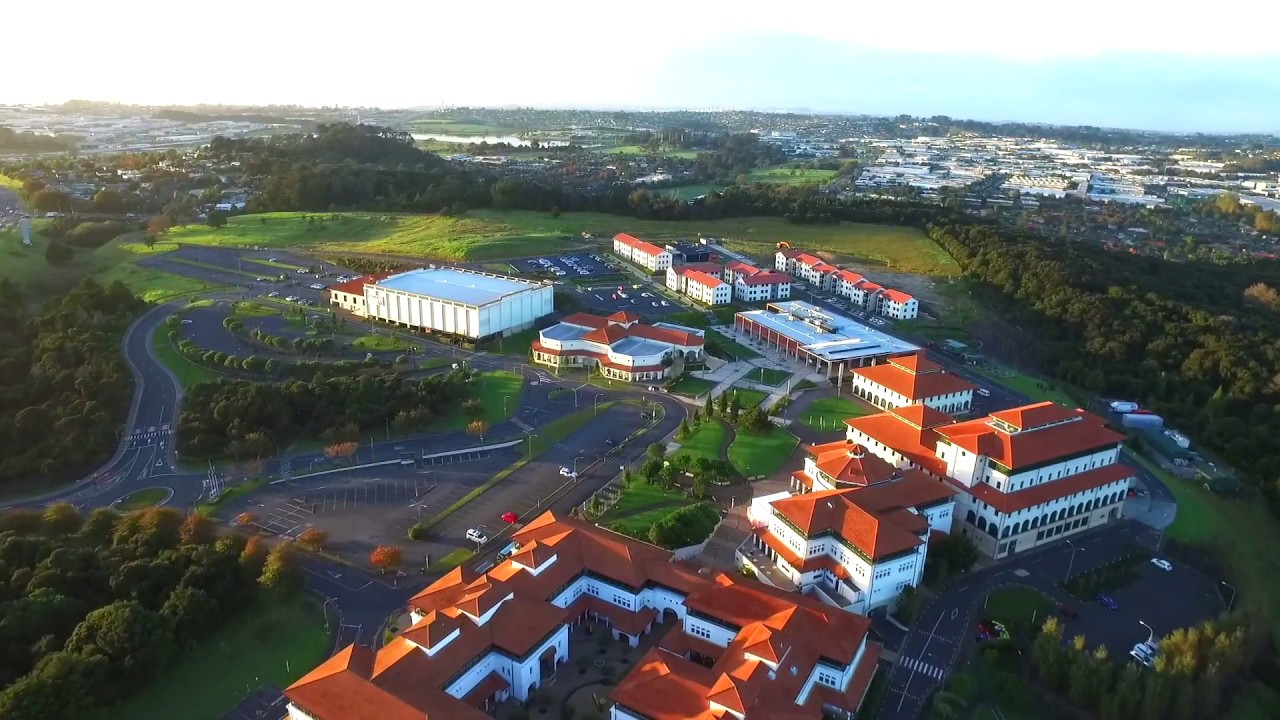
Manawatu campus (Palmerston North)
The Manawatu campus is Massey's original campus. With lovely heritage buildings and park-like grounds located near Palmerston North city, it is one of the best places in the country to experience the real student lifestyle. With a huge portion of the population under 25 it is the perfect place for learning and living. The large campus is beautiful year-round with 11,500 different varieties of plants and trees in the form of manicured gardens, green fields, woodlands and bush.
Intakes
- Feb
Application Processing Time in Days: 30
Minimum English Language Requirements
| English Level Description | IELTS (1.0 -9.0) | TOEFL IBT (0-120) | TOEFL CBT (0-300) | PTE (10-90) | |
|---|---|---|---|---|---|
| Expert | 9 | 120 | 297-300 | 86-90 | |
| Very Good | 8.5 | 115-119 | 280-293 | 83-86 | |
| Very Good | 8 | 110-114 | 270-280 | 79-83 | |
| Good | 7.5 | 102-109 | 253-267 | 73-79 | |
| Good | 7 | 94-101 | 240-253 | 65-73 | |
| Competent | 6.5 | 79-93 | 213-233 | 58-65 | |
| Competent | 6 | 60-78 | 170-210 | 50-58 | |
| Modest | 5.5 | 46-59 | 133-210 | 43-50 | |
| Modest | 5 | 35-45 | 107-133 | 36-43 | |
| Limited | 4 | 32-34 | 97-103 | 30-36 | |
| Extremely Limited | < 4 | < 31 | < 93 | < 30 |
Job Opportunity Potential
Play a key role
Soil scientists play a key role in understanding the earth’s land and water resources. Graduates of Massey’s soil science programmes go on to enjoy careers in regional councils and many agriculture and forestry industries. They also help with challenging tasks such as land reclamation after mining.
You will be valued by employers for your critical thinking, complex problem solving and observation skills.
Possible career paths include being an agronomist for a major fertiliser company, an environmental or resource management officer for a regional council or agricultural industry body. You could become a specialist in soil mapping and interpretation, precision agriculture, nutrient management or the environmental protection of waterways. An understanding of a soil’s production potential is valued by agricultural service industries whether you become soil conservationist, crop consultant, research technician, or a marketing manager for an agricultural firm.
Earn more
A 2017 Ministry of Education publication, The post-study earnings and destinations of young domestic graduates, found that in New Zealand:
- young master’s graduates earn more than one and a half times more than the national median (five years after study)
- earnings and employment rates increase with the level of qualification completed
- five years after completion, the median earnings of young master’s graduates are 15% higher than for those with a bachelor’s degree.
PSW Opportunity
Level 7 (Bachelor’s degree)
- Duration: Equal to length of study (typically up to 3 years)
- Requirement: minimum 30 weeks full time study in NZ
Level 7 (Graduate Diploma)
Eligible for PSWV
Conditions:
- Must also hold a Bachelor’s degree (NZ or overseas)
- Duration: Up to length of study (typically 1 year)
Level 8 (Postgraduate Diploma)
- Duration: Equal to length of study, OR
- Up to 3 years in some cases (if part of higher qualification pathway)
Level 9 and 10 (Master’s degree and Doctoral degree)
- Duration: 3 years
- Condition: Must study at least 30 weeks in New Zealand
- Most eligible international students can work up to 25 hours per week during study and full-time during scheduled breaks, only if their student visa includes work rights.
- Foundation, pathway and short courses have different rules.
- Not allowed for part time students.
Admission Requirement / Eligibility Criteria
Postgraduate academic entrance requirements
Masters, postgraduate diplomas and postgraduate certificates An appropriate undergraduate degree from a recognised tertiary institution is required
- IELTS- 6.5 (no band less than 6.0)
- TOEFL iBT- 90 overall (min 20 in Writing)
- PTE Academic- 58 Overall (min 50 in communicative skills)
- Course Type: Full Time
- Course Level: Masters/PG Degree
- Duration: 02 Year
-
Total Tuition Fee:
74420 NZD
Average Cost of Living: 20000 NZD /year
Application Fee: N/A
Similar Programs
- Master of Management (Sustainability) at Massey University
- Master of Information Sciences (Computer Science) at Massey University
- Master of Veterinary Studies at Massey University
- Environmental Sustainability – Master of Sustainable Development Goals at Massey University
- Master of Speech and Language Therapy at Massey University
- Master of Science (Nanoscience) at Massey University