


Bachelor of Engineering Technology
Are you a hands-on kind of person who enjoys planning and problem-solving?
Use those strengths to help shape your future within the Engineering industry.
Engineering Technologists are in high demand around the world for their skills and experience in combining engineering theory with the applied and practical components required in a range of industries. With hard work and a responsible attitude, you could set your sights on project management or consultancy roles in your particular fields.
Gain skills in management, economics, communications, problem-solving and critical thinking, while developing a deep understanding of the principles and practical application of modern technology in your area of specialization. During the third year, you will have the opportunity to participate in a significant industry-based project in order to gain experience within the workplace.
Campus Information
Dunedin Campus
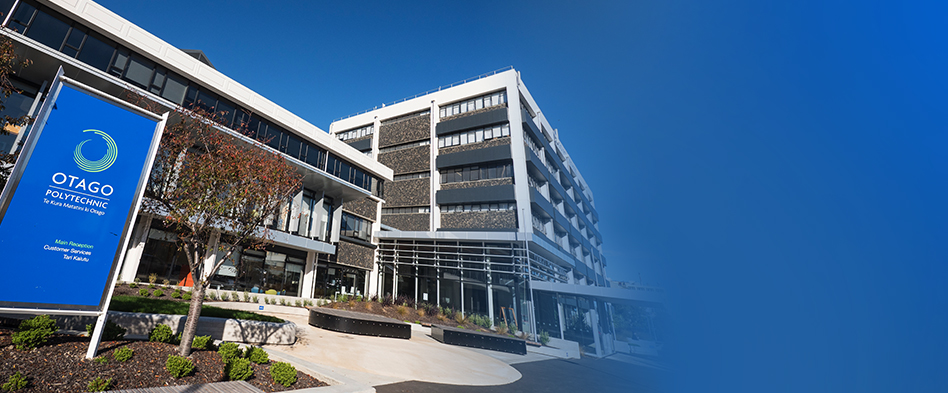
This is the main Otago Polytechnic campus. We're just ten minutes' walk from the city centre, with its great shopping and superb cafés, restaurants, museums and galleries. We're right near the harbour, mountain bike tracks, sports facilities, the cricket oval and Forsyth Barr Stadium, and a short drive away from excellent surf beaches, and outlying suburbs that have their own cool village vibe.
Intakes
- Feb
- July
Application Processing Time in Days: 10
Minimum English Language Requirements
| English Level Description | IELTS (1.0 -9.0) | TOEFL IBT (0-120) | TOEFL CBT (0-300) | PTE (10-90) | |
|---|---|---|---|---|---|
| Expert | 9 | 120 | 297-300 | 86-90 | |
| Very Good | 8.5 | 115-119 | 280-293 | 83-86 | |
| Very Good | 8 | 110-114 | 270-280 | 79-83 | |
| Good | 7.5 | 102-109 | 253-267 | 73-79 | |
| Good | 7 | 94-101 | 240-253 | 65-73 | |
| Competent | 6.5 | 79-93 | 213-233 | 58-65 | |
| Competent | 6 | 60-78 | 170-210 | 50-58 | |
| Modest | 5.5 | 46-59 | 133-210 | 43-50 | |
| Modest | 5 | 35-45 | 107-133 | 36-43 | |
| Limited | 4 | 32-34 | 97-103 | 30-36 | |
| Extremely Limited | < 4 | < 31 | < 93 | < 30 |
Job Opportunity Potential
Career planning and decision making
Career is a whole of life concept and not just what you are currently doing as a ‘job’. It is the Interrelatedness of all things currently in your life – study, leisure, family, friends, voluntary and/or community work, and how you fit it all together.
Career Planning
There are so many choices and options available and this can make planning your career quite difficult. The new 'world of work' requires you to be in charge of creating your own career; managing it will be a life-long journey.
Your most important asset is yourself. Therefore, the more you invest in yourself in the form of skills and knowledge development, self-awareness, networking and gaining relevant experiences, the more you expand your opportunities.
Self-assessment
Self-assessment or self-understanding is the process of knowing yourself. Before you can decide what you want to be, you first have to define who you are.
As you continue to develop both personally and professionally throughout your career, it will be necessary for you to re-assess yourself periodically in relation to your career goal provider.
Career Exploration - The World of Work
It is important to explore the 'world of work' before making a career decision to ensure that you are well informed of the work environment. Knowing where the jobs are and how easy it is to get them will influence your choices. Being aware of the obstacles or trends in the world of work will help you make career enhancing decisions to enable you to transition into successful employment.
Career pathways
From the information from your research select the one job that most appeals to you. Taking into consideration all of the information that you have gathered so far about yourself, and any other information, identify why you have chosen one particular path over the other. You could do this by drawing up a table where you list advantages and disadvantages.
Developing your action plan
Once you know what direction your career goal is in, you need to develop a career action plan. A career action plan helps to clarify directions and decision making.
Put the plan into action
The final step in the career plan is Deliver. Now you need to put your plan into action and make it happen. Start the journey towards a career you will love.
PSW Opportunity
Level 7 (Bachelor’s degree)
- Duration: Equal to length of study (typically up to 3 years)
- Requirement: minimum 30 weeks full time study in NZ
Level 7 (Graduate Diploma)
Eligible for PSWV
Conditions:
- Must also hold a Bachelor’s degree (NZ or overseas)
- Duration: Up to length of study (typically 1 year)
Level 8 (Postgraduate Diploma)
- Duration: Equal to length of study, OR
- Up to 3 years in some cases (if part of higher qualification pathway)
Level 9 and 10 (Master’s degree and Doctoral degree)
- Duration: 3 years
- Condition: Must study at least 30 weeks in New Zealand
- Most eligible international students can work up to 25 hours per week during study and full-time during scheduled breaks, only if their student visa includes work rights.
- Foundation, pathway and short courses have different rules.
- Not allowed for part time students.
Admission Requirement / Eligibility Criteria
NCEA Level 2
Equivalent entry requirements for certificates and diplomas
At least 55% average across 4 academic subjects in CBSE, HSC or ISC with at least 60% in English, or equivalent in other boards
NCEA Level 3
Equivalent entry requirements for bachelors' degrees and selected diplomas
At least a 70% average over 4 academic subjects in CBSE, HSC, or ISC with at least 60% in English, or equivalent in other boards.
Certificate at Level 3
General or Academic score of 5 with no band score lower than 5.
Certificate at Level 4
General or Academic score of 5.5 with no band score lower than 5.
Certificate or Diploma at Level 5
Academic score of 5.5 with no band score lower than 5.
Certificate or Diploma at Level 6, Diploma or degree at Level 7, Graduate Certificate or Diploma at Level 7
Academic score of 6 with no band score lower than 5.5.
Post-graduate Diploma or Post-graduate Certificate at Level 8, Bachelor Honours Degree at Level 8, Master’s Degree at Level 9, Doctoral Degree at Level 10
Academic score of 6.5 with no band score lower than 6.
- Course Type: Full Time
- Course Level: Bachelors/UG Degree
- Duration: 03 Year
-
Total Tuition Fee:
90000 NZD
Average Cost of Living: 20000 NZD /year
Application Fee: N/A