



Master of Engineering (Sustainable Energy)
Immerse yourself in the latest technologies that improve energy efficiency. Learn how to use renewable resources to reduce the environmental and social impacts of conventional energy resources.
With the Master of Engineering (Sustainable Energy), taught in the heart of Melbourne, you'll learn why managing the transition towards a more sustainable energy sector is a priority for governments, the private sector and the general community.
Through your studies in this degree, you will learn to:
- plan and effectively manage an independent project on sustainable energy topics at a professional engineering level
- locate and critically review scientific and engineering literature, and apply engineering practices and research methods to conduct sustainable energy projects and evaluate their results
- communicate findings effectively to a professional audience.
A final-year research project forms an essential part of this degree. Through this self-selected project (from a range of available topics), you will draw on not only the advanced engineering skills you have built, but also coursework around ethical, economic and social responsibility.
Campus Information
Bundoora Campus
The Bundoora campus, in the north-eastern suburbs of Melbourne, is set in a tranquil parkland environment complete with outdoor sporting facilities.
Melbourne city campus
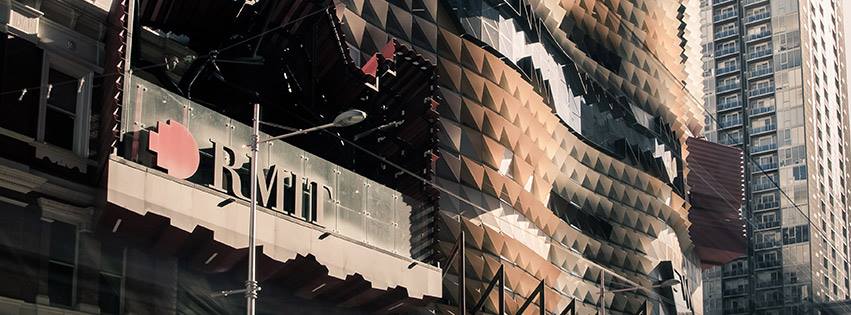
Melbourne City campus is located in the cosmopolitan heart of the “world’s most liveable city” and is surrounded by public transport, restaurants, cafes, theatres, galleries and parks
Intakes
- Feb
- July
Application Processing Time in Days: 20
Application Process
Minimum English Language Requirements
| English Level Description | IELTS (1.0 -9.0) | TOEFL IBT (0-120) | TOEFL CBT (0-300) | PTE (10-90) | |
|---|---|---|---|---|---|
| Expert | 9 | 120 | 297-300 | 86-90 | |
| Very Good | 8.5 | 115-119 | 280-293 | 83-86 | |
| Very Good | 8 | 110-114 | 270-280 | 79-83 | |
| Good | 7.5 | 102-109 | 253-267 | 73-79 | |
| Good | 7 | 94-101 | 240-253 | 65-73 | |
| Competent | 6.5 | 79-93 | 213-233 | 58-65 | |
| Competent | 6 | 60-78 | 170-210 | 50-58 | |
| Modest | 5.5 | 46-59 | 133-210 | 43-50 | |
| Modest | 5 | 35-45 | 107-133 | 36-43 | |
| Limited | 4 | 32-34 | 97-103 | 30-36 | |
| Extremely Limited | < 4 | < 31 | < 93 | < 30 |
Job Opportunity Potential
Achievement Relative to Opportunity (ARtO)
RMIT University is committed to creating inclusive culture that recognises diversity of our staff. We understand that life is multi-dimensional, and you may experience a range of professional and personal circumstances that may affect your career. As such, we implemented ‘Achievement Relative to Opportunity’ (ARtO) principles within our recruitment-related policies and processes. You may decide to activate ARtO to address the impact of personal or work circumstances on the scope of your application.
What is ARtO?
Achievement Relative to Opportunity (ARtO) is an evaluative framework in which there is a positive acknowledgement of what a staff member could or has achieved given the opportunities available to them. This framework is not about providing “special consideration” or expecting lesser standards of performance, but it assists to ensure that the overall quality and impact of achievements is given more weight than the quantity, rate or breadth of particular achievements in relation to their personal, professional and other circumstances.
ARtO framework is used for the purpose of employment-related decisions such as:
Recruitment, including internal mobility
Performance review and talent review
Career planning, including Academic Promotion
ARtO is relevant to all academic staff and academic positions throughout the employee life cycle, including recruitment, performance review/work planning, development and promotion. It acknowledges that personal circumstances are not static and enables candidates with non-linear and less traditional careers to progress their career and skill development. It also gives all employees equal opportunities to discuss their potential and achievements.
Understanding ARtO
What are the benefits of ARtO?
ARtO framework will help you manage and advance less traditional career and it positively acknowledges your work input and achievement given opportunities available to you throughout your career. It enables you to identify and focus on the quality and impact of the work you produced, rather than the quantity and rate at which it is produced.
How does ARtO work?
ARtO is based on the principle that measurement of achievement should be relative to the opportunities available to develop areas of expertise and demonstrate such achievements.
ARtO focuses on overall quality and impact of contributions and achievements over quantity, rate or breadth of particular achievements.
ARtO explicitly acknowledges that personal circumstances are not static and have a material effect on the time a staff member has for work-related activity.
ARtO maximises the application of each staff member’s unique mix of knowledge, skills and attributes to work group outcomes.
If you have any questions or require more information on how to activate ARtO at the recruitment process, we would be happy to assist. Please email the talent team on TalentSupport@rmit.edu.au.
International applicants
If you are from overseas and considering moving to Australia to work, there are plenty of online resources to assist you with your planning.
Living in Melbourne
Migrating to another country is one of the biggest decisions of your life. We recommend that you do your research. As doing research into the new town or city that you intend to live in will not only make your settlement and integration into the local community a lot smoother but can also help match your expectations with the reality of life in Melbourne, Australia.
Melbourne, with a population of nearly 4 million people, is a multicultural city. It is also an easy city to navigate with a wide range of transport option, including an extensive public transport system.
Visa information
To work within Australia you will need a valid visa. Current information on migrating to Australia is available from the Department of Immigration and Border Protection (DIBP) website. As there are many visa categories, and variations in personal circumstances, any advice should be sought from DIBP or your nearest Australian Overseas Embassy (a list of Embassies is also available from the DIBP website).
Private health insurance
Medicare is Australia's national public health insurance system. Private Health Insurance is also available from a range of providers. Staff on temporary visas are not covered by the national public health insurance scheme and must take out their own private health insurance for the duration of their appointment.
PSW Opportunity
- 2 years
Admission Requirement / Eligibility Criteria
Successful completion of an Australian bachelor degree (or international equivalent) in one of the following fields: Engineering, Science, Information Technology, Physics and Chemistry with a GPA of at least 2.0 out of 4.0.
- Applicants who have a successfully completed a relevant degree (as above) with a GPA of at least 1.5 out of 4, will be considered if they have at least 3 years of relevant industry experience.
- Prior studies in the chemistry of energy (thermo-fluid science) is desirable. OR
- Successful completion of an Australian postgraduate qualification (or international equivalent) in a related discipline (as above). OR
- Applicants without any relevant prior qualification will be considered if they have at least 10 years of relevant industry experience.
- International qualifications are assessed for comparability to Australian qualifications according to the Australian Qualifications Framework (AQF).
For More Information Please Contact To Our PSA Counselor.
- Course Code: 079934A
- Course Type: Full Time
- Course Level: Masters/PG Degree
- Duration: 02 Year
-
Total Tuition Fee:
92160 AUD
Average Cost of Living: 29710 AUD /year
Application Fee: 100 AUD
Similar Programs
- Master of Engineering (Biomedical Engineering) at RMIT University
- Master of Engineering (Mechanical, Manufacturing and Mechatronic Engineering) at RMIT University
- Master of Engineering (Environmental Engineering) at RMIT University
- Master of Artificial Intelligence at RMIT University
- Master of Engineering (Electrical & Electronic Engineering) at RMIT University
- Master of Engineering (Civil Engineering) at RMIT University